

About This Activity
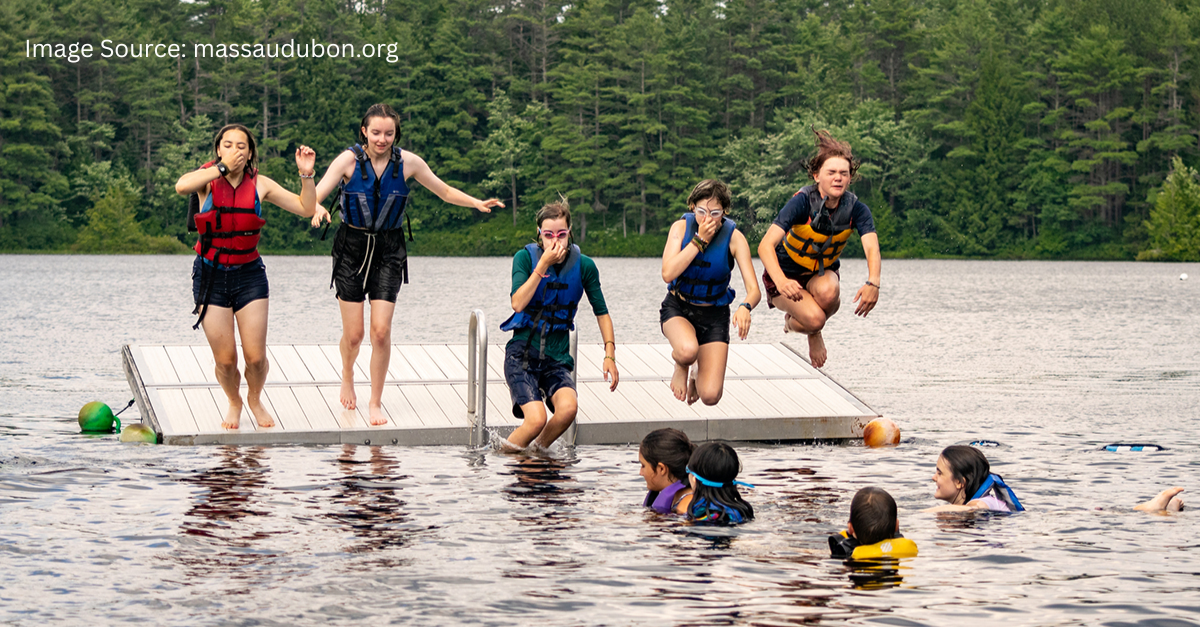
Mass Audubon runs a network of nature-based summer day camps across many of its wildlife sanctuaries statewide, plus an overnight camp for older kids and teens. While details vary by location, the core idea is the same: kids spend their days outside, exploring forests, fields, ponds, and shorelines with naturalist educators. Typical day camps are grouped by age (often from preschool/early elementary through middle school) and mix hands-on nature exploration with hikes, ponding and bug hunts, games, crafts, and low-key science activities. Many sites build in weekly themes, like birds, pond life, survival skills, or climate and conservation, so kids get both unstructured outdoor play and focused learning about the local ecosystem.
For older campers, Mass Audubon offers more specialized and leadership-focused programs, including teen camps, counselor-in-training (CIT) options, and its well-known Wildwood overnight camp, where kids sleep in cabins or tents and spend full days hiking, boating, doing nature study, and participating in classic camp activities like campfires and group games. Parents tend to use these programs as a way to give kids a screen-light, outdoors-heavy summer, especially if they want their children to build confidence, independence, and a relationship with nature, not just be entertained indoors.
In most locations, camps run in week-long sessions, with full-day options and extended care in some communities, making them a practical choice for working families who also care about environmental education.
Dates & Schedule
June - August
Location
Headquarters
208 South Great Road
Lincoln, MA 01773
Camps themselves are located 17+ sites across the state of Massachusetts (and NH).
- Wildwood Overnight Camp, Rindge, NH
- Berkshires (Pleasant Valley), Lenox
- Wachusett Meadow, Princeton
- Broadmoor, Natick
- Moose Hill, Sharon
- Broad Meadow Brook, Worcester
- Wild at Art (MABA Ed Center), Canton
- Blue Hills Trailside Museum, Milton
- Felix Neck, Edgartown
- Habitat, Belmont
- Ipswich River, Topsfield
- Stony Brook, Norfolk
- Arcadia, Easthampton/Northampton
- Drumlin Farm, Lincoln
- North River, Marshfield
- Wellfleet Bay, Wellfleet
- Boston Nature Center, Mattapan
Costs & Pricing
Pricing is on a sliding scale based on family size and income. See more details on the tiers here.
Financial aid is available, with the application here.
How to Register
Camps can be registered for online. Registration opens in January, staggered for a smoother process. See your camps registration date and link here.
Contact
Ratings & Reviews
What Parents Like
- Parents consistently love that kids are actually outside most of the day, exploring woods, fields, ponds, and trails instead of just doing nature crafts inside. Many mention kids coming home muddy, tired, and happy, talking about frogs they found, hikes they took, or animals they saw. (1, 2)
- Families frequently praise the counselors and naturalists as warm, patient, and genuinely passionate about nature, noting that staff remember kids’ names, follow their curiosity (“Let’s go see where that animal track leads”), and are good at supporting shy or hesitant campers. Parents of younger and neurodivergent kids often comment that staff are respectful of different comfort levels with bugs, dirt, and new experiences. (1, 2)
- A big theme in reviews is that kids don’t just “play in the woods”. They actually learn about ecosystems, conservation, and wildlife in ways that stick. Parents mention children teaching siblings about invasive species, bird calls, or why wetlands matter, and they appreciate the balance of games, crafts, and real science. (1)
- Many camps run at individual sanctuaries are described as having a cozy, community feel, with reasonable group sizes and a welcoming atmosphere. Parents note that kids who don’t always love loud, high-energy rec camps often do better at Mass Audubon because the environment is calmer, more nature-focused, and less competitive. (3)
What Parents Think Could be Improved
- A predictable critique: it’s very weather-dependent. On very hot, rainy, or buggy days, some parents say their kids came home uncomfortable or cranky. (1, 2)
- Some families mention that popular weeks fill quickly, especially at well-known sanctuaries or for specialty themes, and that registration can feel competitive. Others note that drop-off/pickup logistics (e.g., small parking lots, one-way drives, or needing to shuttle between parking and camp areas) can be a bit tricky the first few days. (1)
Our Take
Across different sanctuaries, parent feedback on Mass Audubon nature camps is strongly positive: families who choose these camps are usually looking for genuine outdoor time, thoughtful environmental education, and staff who really know and love nature, and they feel Mass Audubon delivers on that. Kids come home tired, dirty, and full of stories—the good kind of summer.
The trade-offs parents mention most often are weather-related discomfort, registration pressure for popular weeks, and higher cost than basic rec programs. For families who value nature immersion and can plan ahead (and pack appropriately), Mass Audubon camps are often described as a standout, “this is what summer should feel like” option.