


.webp)
Every spring, teachers quietly brace for it, and parents vaguely worry about it: the summer slide.
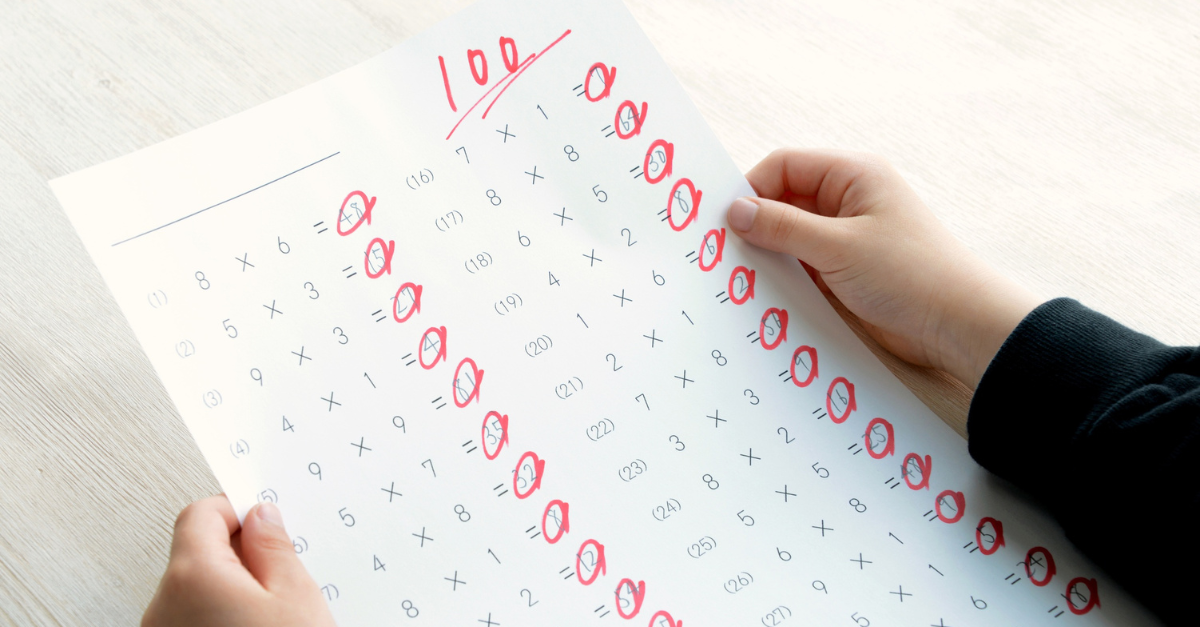
When kids aren’t engaged in learning over the summer, they lose a noticeable chunk of what they worked so hard to gain during the school year. A 2021 study found that the average student lost 17–28% of their English language arts gains and 25–34% of their math gains over the summer.
As literacy nonprofit Literacy Now explains (citing Jeff Smink’s New York Times op-ed “This Is Your Brain on Summer”), students can lose two months or more of achievement if they stop reading over the summer, and that loss is cumulative—summer after summer.
So no, you don’t have to turn your house into a year-round school. But a week or two of truly academic summer camp can make a big difference, especially when it delivers 40 focused hours on a skill instead of a rushed 30-minute unit during the school year.
Below are 10 types of academic summer programs that can help keep your child’s brain engaged and stop the slide.
Why academic summer camps work (when school can’t)
Most school-year learning looks like:
- 30–45 minutes per subject
- 1–5 times a week
- Constant switching between classes, plus assemblies, interruptions, and holidays
That’s…not a lot of deep, uninterrupted time on any one topic.
A week of academic camp, on the other hand, often looks like:
- 3–5 hours a day of focused work on one subject or skill
- 5 days in a row
- Minimal context-switching
Even one week can give your child 20–25 hours of math, writing, or reading in a row, which is why these programs can feel so “sticky” compared to a typical school unit.
1. Art of Problem Solving (AoPS) Academy
Best for: Math-loving kids who like puzzles, logic, and challenge.
AoPS Academy offers summer camps and classes in math, science, and language arts aimed at kids who want more depth than they usually get at school.
Their lower-level math camps (“Math Beasts”) focus on:
- Number sense
- Geometry
- Creative problem solving
Higher levels lean into contest-style math and deeper reasoning. For kids who already like math—or who are bored by “just” computation—AoPS is one of the few places where it’s normal to be excited about hard problems.
Why it fights the summer slide: Because AoPS is designed around problem solving instead of rote review, kids spend a week or more wrestling with concepts in ways that stick, rather than relearning the same worksheet skills.
2. Russian School of Mathematics (RSM)
Best for: K–12 students who want strong math foundations or to stretch beyond grade level.
Russian School of Mathematics runs summer math programs for grades K–12 that they explicitly describe as an opportunity to “reinforce math knowledge and prepare for the upcoming school year” and “prevent summer learning loss.”
Their summer offerings typically include:
- Grade-level prep (solidifying last year + previewing next year)
- Enrichment and competition prep (for advanced students)
- In some branches, STEAM or intensive 3-week formats
Why it fights the summer slide: RSM is built around structured, cumulative math. A few hours a week over the summer keeps kids’ math muscles flexing and can smooth the transition into a tougher fall curriculum.
3. Kumon
Best for: Families who want consistent daily practice with flexible timing.
Kumon isn’t a camp in the traditional sense, but its summer learning programs are specifically marketed as a way to prevent summer learning loss in math and reading. The Kumon program uses short, daily worksheets to focus on mastery and repetition of core skills.
Why it fights the summer slide: Kumon is all about daily, bite-sized work. Even without a full-day camp structure, 15–30 minutes a day of targeted practice can counteract that 17–34% skill loss we see in the research.
4. Mathnasium
Best for: Kids who need to catch up, keep up, or get ahead in math—with a camp-like feel.
Mathnasium offers summer math programs with themes like “Prevent Summer Learning Loss.” Their centers provide:
- Personalized learning plans based on assessments
- Games, manipulatives, and problem-solving activities
- Flexible scheduling (in-center or online), often in camp-style blocks
Why it fights the summer slide: Mathnasium treats summer as a chance to close gaps and build confidence in a low-pressure, semi-camp environment, perfect if you want some academic structure without sacrificing all the fun.
5. Sylvan Learning Academic & STEM Camps
Best for: Kids who need support in reading/writing/math and/or want STEM projects.
Sylvan runs a variety of academic camps (reading, writing, math, study skills) and STEM camps (coding, robotics, engineering) throughout the year. They’re very explicit: “From summer camps to winter camps… our all-year academic and test prep camps will help your child step into the classroom more confident and excited about learning.”
Why it fights the summer slide: Their academic camps give kids focused time on core skills (often in small groups), while STEM camps help keep critical thinking and problem-solving sharp through hands-on projects.
6. Huntington Learning Center Summer Programs
Best for: Kids with noticeable gaps or those needing intensive, tailored support.
Huntington positions its summer programs as customized, targeted tutoring to “build skills, confidence, and motivation.” They offer:
- 1:1 and small-group tutoring across reading, writing, math, and test prep
- Structured reading adventures and subject-specific programs
Why it fights the summer slide: If your child is already behind or has struggled with the school year’s content, Huntington’s high-dosage, tailored summer tutoring can reverse the slide, not just prevent it.
7. Institute of Reading Development Summer Reading Programs
Best for: K–12 students who need a big boost in reading skills and stamina.
The Institute of Reading Development partners with universities and community organizations to offer summer reading skills programs that focus on comprehension, speed, and confidence.
Why it fights the summer slide: Reading is often the hardest area to maintain without structure. A week or multi-week reading program can prevent the classic “two months or more of reading loss.”
8. iD Tech Camps (STEM & Coding)
Best for: Tech-curious kids who need an academic-ish camp that doesn’t feel like school.
iD Tech runs week-long STEM camps and teen academies at 75+ universities across the U.S., with courses in coding, AI, game design, Roblox/Minecraft modding, and robotics. They position themselves as “the nation’s original and most trusted youth STEM educator,” where kids “forge a future-proof foundation” in tech.
Why it fights the summer slide: Even though it feels like “fun camp,” kids are spending 30+ hours a week coding, designing, and solving problems—exactly the kind of high-intensity, project-based learning that builds real skills and keeps math/logic muscles strong.
9. Local AoPS/RSM/Kumon/Mathnasium + Library Combo
Best for: Families who want structure but also need to watch costs.
One underrated approach: pair a local academic center (like AoPS Academy, RSM, Kumon, or Mathnasium) with free or low-cost library programs:
- Morning: 2–3 hours at a math or reading center
- Afternoon: library reading program, maker space, or book club
Libraries often run reading challenges, STEM days, and story times that are free or very inexpensive and explicitly designed to fight the summer slide.
Why it fights the summer slide: You get the targeted instruction from a center, plus the daily reading and informal learning that research shows makes a big difference in reading and overall achievement.
10. University & College Youth Programs (CTY & Friends)
Best for: High-motivation learners and older kids ready for a “mini college” experience.
Many universities run academic youth programs in summer—some residential, some commuter. A well-known example is Johns Hopkins Center for Talented Youth (CTY), which offers advanced summer courses and online programs for high-ability students, while other colleges host math circles, writing institutes, engineering camps, and research-based experiences.
Why it fights the summer slide: These programs often give teens 40+ hours over one or two weeks focused on a single topic, say, number theory, creative writing, or neuroscience. That kind of sustained immersion can push skills far beyond grade level and make fall classes feel much easier by comparison.
Pick What Fits Your Kid (and Your Life)
The research is clear: without some kind of academic touchpoint, kids can lose up to a third of their gains in key subjects over summer, and that loss compounds over time.
But you don’t need to fill every week with an intense academic camp (which could lead to burnout).
Ask yourself:
- Where does my child need the most support or stretch: math, reading, writing, or enrichment?
- What kind of environment will they actually enjoy: quiet tutoring, puzzle-heavy math, creative coding, or reading adventures?
- How many weeks can we realistically commit to, given cost and mental fatigue?
Even one focused week, whether it’s math at RSM, reading with the Institute of Reading Development, STEM at AoPS or iD Tech, or a consistent Kumon/Mathnasium routine, can make a measurable difference when school starts again.
And if you’re reading this while juggling 12 tabs of camp options… yes, we see you. This is exactly why we’re building the MomBrains Camp Finder: so you can search, filter, save, and compare academic camps (and everything else) in one place, instead of playing extracurricular roulette.
Remember! The goal isn’t to cancel summer. It’s to sprinkle in just enough learning that their hard-won progress doesn’t melt away with the popsicles.


.webp)
.webp)
.webp)


.png)


.png)
.png)